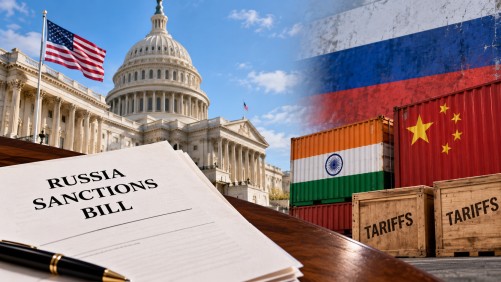
As global energy dynamics continue to shift, the U.S. House of Representatives has passed pivotal legislation aimed at intensifying economic pressure on Russia and Iran. The Lindsey O. Graham Sanctioning Russia and Iran Act of 2026, approved by a 262-159 vote, empowers President Donald Trump to impose tariffs of up to 100% on nations purchasing Russian oil and natural gas. This measure, having already cleared the Senate, now awaits the president’s consideration.
The legislation specifically targets Russia’s energy and defense sectors, as well as the country’s network of oil tankers used to bypass existing sanctions. It establishes a framework within which the U.S. president can impose significant tariffs on countries that continue to engage with Russian energy markets or are involved in sanctions evasion activities. While the act does not automatically enforce a 100% tariff, it grants the president the authority to do so under certain conditions.
Among the countries that might be affected by this legislation are India and China, given their substantial imports of Russian energy. The potential for increased tariffs introduces a new dimension to U.S.-India trade talks, as India’s Ministry of External Affairs has consistently stated that its energy procurement strategies are determined by national interests.
In addition to targeting Russian energy transactions, the bill also extends existing sanctions on Iran and introduces new penalties against Russian officials, financial institutions, and entities involved in circumventing sanctions. This comprehensive approach is part of the ongoing U.S. strategy to curb Russia’s global influence and economic capabilities.
The legislative move reflects broader geopolitical tensions and the U.S. government’s efforts to leverage economic tools in confronting Russia’s and Iran’s international activities. As President Trump deliberates the bill, the potential ramifications for international trade relations, particularly with major energy consumers like India and China, remain a critical focus.