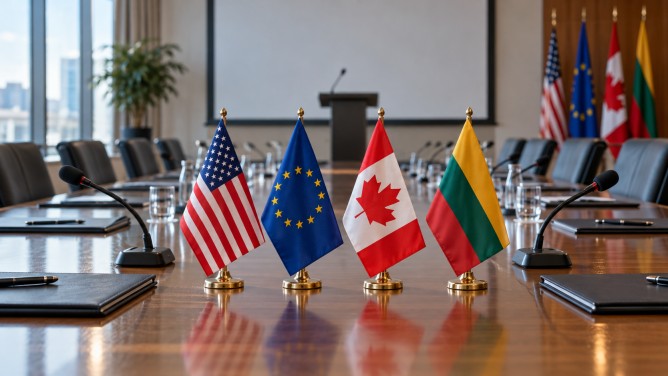
In a move influenced by U.S. concerns, Lithuania, Canada, and the European Union have withdrawn their official support from the #Disinfo2026 conference, a European event focused on tackling disinformation. Scheduled for October 7 and 8 in Vilnius, Lithuania, the conference aims to bring together researchers, journalists, technology experts, and policymakers to discuss strategies for addressing information manipulation. However, a panel discussion questioning whether the United States could be a source of foreign information manipulation has sparked controversy.
The U.S. raised issues over this aspect of the conference, which led to diplomatic discussions with participating governments. Following these talks, the logos of Lithuania’s Foreign Ministry, Canada’s Global Affairs department, and the European External Action Service were removed from the event’s list of supporters. Internal U.S. documents reportedly highlighted the American approval of Lithuania’s decision to reduce its involvement.
Lithuania justified its withdrawal by stating that parts of the conference did not align with its official governmental stance. Meanwhile, Canada adjusted its participation due to changes in the framing of some panel discussions, though Canadian officials continued attending the event. The EU also stepped back from its official support, citing misalignments with its positions, yet maintained its financial backing for the conference.
The tension revolves around a specific panel exploring the prospect of the United States as a potential foreign information threat, which aims to enhance European organizations’ independent response capabilities to such threats. This has led to a broader debate on balancing the fight against disinformation with the freedom to critique government actions within international forums.
France, however, has maintained its support for the conference, emphasizing the importance of engaging with civil society to develop effective European disinformation policies. This situation underscores the growing differences among Western nations on defining foreign information threats and handling criticism in international civil society contexts.