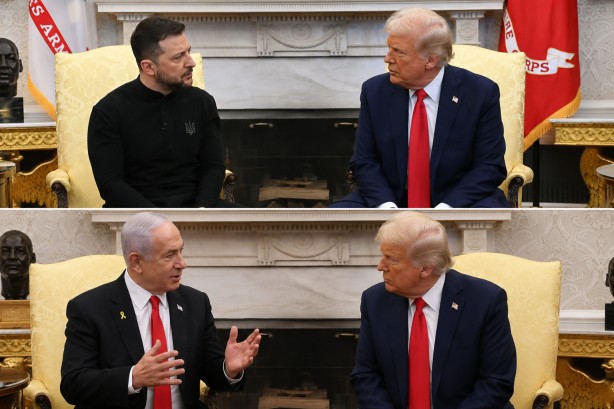
In a series of diplomatic engagements at the White House, U.S. President Donald Trump met separately with Ukrainian President Volodymyr Zelenskyy and Israeli Prime Minister Benjamin Netanyahu. Both leaders left the discussions with positive sentiments, although Trump refrained from sharing specific details about the conversations. Zelenskyy, however, indicated that the focus was on enhancing Ukraine’s air defense, particularly through potential agreements to manufacture Patriot missile interceptors within Ukraine. The dialogue also touched upon reviving diplomatic discussions between the two nations.
This meeting with Zelenskyy underscores the ongoing U.S. involvement in supporting Ukraine amidst regional tensions. As Ukraine continues to navigate its defense strategies, the potential licensing for missile production represents a significant aspect of their collaboration with the U.S. The discussions also suggest a broader commitment to re-establishing diplomatic channels, signaling a proactive stance in addressing Ukraine’s security concerns.
Meanwhile, Netanyahu’s visit to Washington marked his first meeting with Trump in the Oval Office since their countries’ joint military actions targeting Iran earlier in the year. Their discussions were reportedly centered on regional security issues, including Iran, Lebanon, and enhancing the recently established Abraham Accords, which aim to normalize relations between Israel and several Arab nations.
The timing of these meetings reflects the evolving nature of U.S. foreign policy in relation to the ongoing conflicts in both Eastern Europe and the Middle East. Both Ukraine and Israel continue to seek robust support from Washington to address their respective security challenges. The U.S. remains a critical ally, with these meetings potentially shaping future strategies and alliances in these volatile regions.