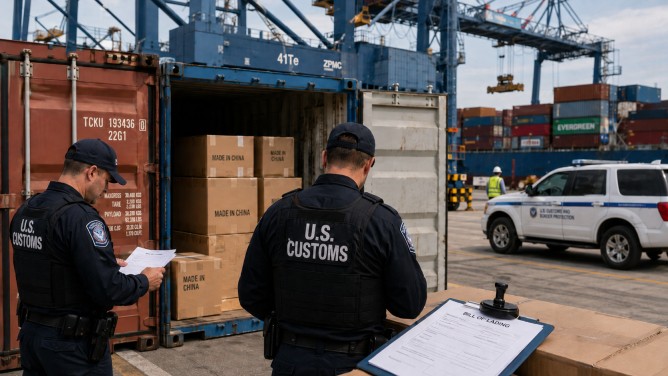
The United States has brought forward allegations against 38 countries and the European Union, accusing them of being involved in a “shadow transshipment network.” This network is purportedly used to funnel Chinese goods, which are subject to hefty U.S. tariffs, into the American market by routing them through intermediary nations. The findings are laid out in a report titled “The Great Transshipment Scam,” which suggests that these potentially illicit activities could be valued at approximately $60 billion, contributing to considerable losses in U.S. tariff revenue.
The report identifies a wide array of countries and territories supposedly participating in this network, including prominent names such as India, Canada, the European Union, and Mexico, as well as others like South Korea, Taiwan, Brazil, and Vietnam. The document calculates that about $67 billion worth of goods destined for the U.S. might have been rerouted from China through major hubs in countries such as Mexico, India, and Vietnam by 2025. This rerouting is estimated to have deprived the U.S. of about $28 billion in tariff revenue.
Within the report, specific attention is given to the Pune-Gujarat-Chennai corridor in India. It claims that Chinese exports, including items like electric pumps and compressors, have been rerouted through this corridor, benefiting local businesses while simultaneously putting increased competitive pressure on U.S. manufacturers. This strategy is seen as enabling Chinese products to circumvent U.S. tariffs, thereby affecting the domestic market unfairly.
In light of these findings, the United States is contemplating a series of responses to address the situation. Proposed measures include heightening scrutiny through stricter inspections and interdiction, imposing additional tariffs, enacting sanctions, and potentially restricting market access for those countries that are deemed to facilitate these tariff evasion practices. The aim is to curb the economic impact and level the playing field for American businesses facing this indirect competition.