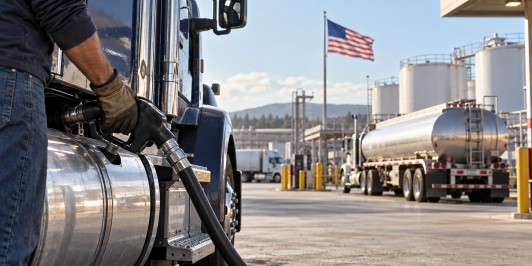
Amid escalating diesel prices in the United States, the Trump administration is contemplating a 90-day ban on diesel exports to bolster domestic fuel supplies. This potential move aims to alleviate the financial burden on American consumers by increasing the availability of diesel within the country, potentially driving prices down. However, experts caution that such a measure may have limited effectiveness and could introduce additional complications for the U.S. fuel industry.
The uneven distribution of diesel supplies across the nation presents a significant hurdle. The bulk of U.S. refining capacity is located along the Gulf Coast, yet shortages are becoming apparent in areas such as the Northeast and the West Coast. The challenge lies in transporting increased fuel supplies from the Gulf Coast to these regions, as existing pipelines are already operating near capacity. While maritime transport offers a potential alternative, it involves longer transit times and higher costs, which may hinder significant price reductions in shortage-affected areas.
Global market dynamics also play a crucial role in shaping U.S. diesel prices. International fuel prices and supply conditions heavily influence domestic prices, providing U.S. refiners with incentives to sell overseas when global rates are more favorable. Recent disruptions in global energy supplies, including those linked to the Iran conflict and attacks impacting Russian refining capacity, have further tightened global supplies, exacerbating pressure on fuel markets.
The United States has a history of implementing energy export restrictions during periods of market stress. Following the Arab oil embargo in 1973-74, the U.S. imposed restrictions on crude oil exports to enhance domestic energy security. These restrictions were gradually lifted and eventually repealed in 2015 as U.S. oil production surged. While a temporary diesel export ban could temporarily augment domestic fuel availability, its overall impact would hinge on factors such as refinery output, transportation capacity, regional demand, and global fuel prices.
Should refiners decide to reduce production due to diminished export opportunities, the anticipated increase in domestic supply might fall short of expectations. Consequently, while the proposed measure may provide some relief by boosting U.S. diesel supplies, it is unlikely to fully resolve the broader supply and pricing challenges currently affecting diesel markets.