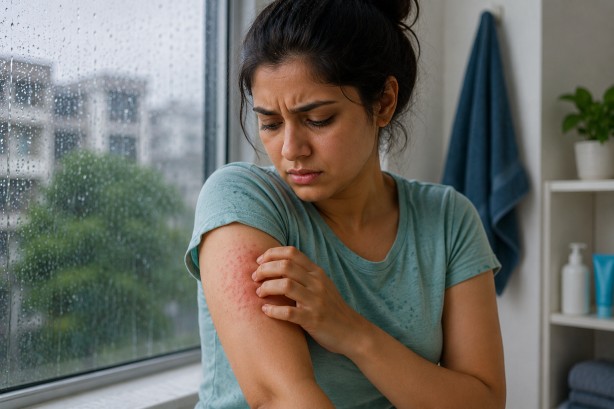
The monsoon can bring relief from scorching temperatures, but increased humidity and frequent dampness can create the perfect conditions for several skin problems. Redness, itching and irritation may become more common during this season, particularly when sweat, moisture and friction remain trapped against the skin.
A rash that persists should not simply be dismissed as a routine reaction to the weather. Several different conditions can cause similar symptoms, and treating the problem without knowing its cause may sometimes make the irritation worse.
5 common reasons for monsoon-related skin rashes
1. Prolonged exposure to moisture
Staying in wet clothes after getting caught in the rain can leave the skin constantly damp. Excess moisture can weaken the skin’s protective barrier, making it more susceptible to irritation and inflammation. Changing into clean, dry clothes as soon as possible can help protect the skin.
2. Excessive sweating
Humidity can make it harder for sweat to evaporate. Sweat may accumulate around the neck, underarms, waist and other skin folds, where friction and moisture can trigger irritation. Wearing loose, breathable clothing and showering after heavy sweating can help.
3. Fungal infections
Warm and humid conditions encourage fungal growth. A fungal infection can sometimes look similar to an ordinary rash, making it difficult to identify without proper evaluation.
Using steroid-based creams without medical advice can potentially worsen or mask some fungal infections. A rash that continues to spread or does not improve should be checked by a healthcare professional.
4. Damp clothes and laundry products
Clothes that remain damp for long periods may irritate sensitive skin. Residual detergent or fabric-care products can also contribute to contact dermatitis in some people. Using a mild detergent and ensuring clothes are completely dry before wearing them may reduce irritation.
5. Existing skin conditions can flare up
Humidity, sweating, friction and environmental allergens can aggravate conditions such as eczema and dermatitis. People who already have sensitive skin may therefore notice increased itching, dryness or redness during the rainy season.
When should you seek medical help?
A rash deserves professional attention if it continues for several days, keeps returning or becomes increasingly uncomfortable. Medical advice is particularly important if there is significant pain, swelling, blistering, discharge or rapid spreading.
Instead of relying on home remedies or randomly applying creams, focus on keeping the skin clean and dry, avoiding harsh products and wearing comfortable, breathable clothing. Persistent or unexplained rashes should be evaluated by a qualified healthcare professional.