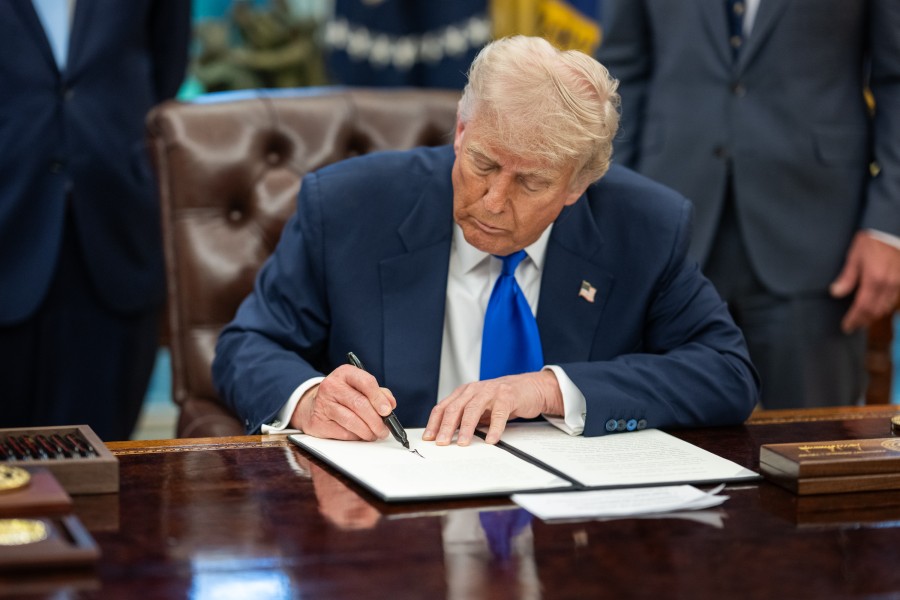
President Donald Trump is preparing to roll out an ambitious initiative to bolster nuclear energy in the U.S., featuring $17.5 billion in low-interest federal loans aimed at deploying Westinghouse AP1000 nuclear reactors nationwide. This financial support, facilitated by the U.S. Department of Energy, is expected to underwrite the acquisition of essential equipment for as many as 10 AP1000 reactors, arranged across five projects each containing two reactors. The plan aligns with a broader effort to enhance domestic energy output and address the surging electricity demands spurred by the rise of artificial intelligence data centers and increased industrial activities.
The initiative has reportedly attracted interest from seven utility companies that have signed letters of intent to join the program. The loans are primarily designed to enable early bulk procurement of specialized reactor parts, which is anticipated to stabilize supply chains and reduce the overall costs of the projects. The Trump administration is optimistic that this financial scheme could trim construction times by up to three years. If all goes according to plan, these reactors might commence commercial operations around the year 2035.
This move is part of a larger, $80 billion nuclear expansion effort that includes a partnership involving Westinghouse Electric Company, Cameco, and Brookfield Asset Management, with construction expected to start on approximately 10 new reactors in 2026. To avoid the financial pitfalls experienced by previous endeavors, such as the Vogtle Nuclear Plant in Georgia—where costs ballooned from an estimated $14 billion to over $30 billion—Westinghouse intends to employ standardized reactor designs and fixed-price contracts. The Vogtle facility recently became home to the first new U.S. nuclear reactors in decades, going online in 2023 and 2024.
The project will emphasize Westinghouse’s AP1000 pressurized water reactors and the AP300 small modular reactor design. The AP1000 technology, already operational at the Vogtle site, is seen as central to the initiative. The administration regards nuclear power as a pivotal element of future energy security, with nuclear currently contributing approximately 20% of the country’s electricity. By expanding this capacity, the administration aims to provide a stable, carbon-free power source that supports both economic growth and technological advancement.