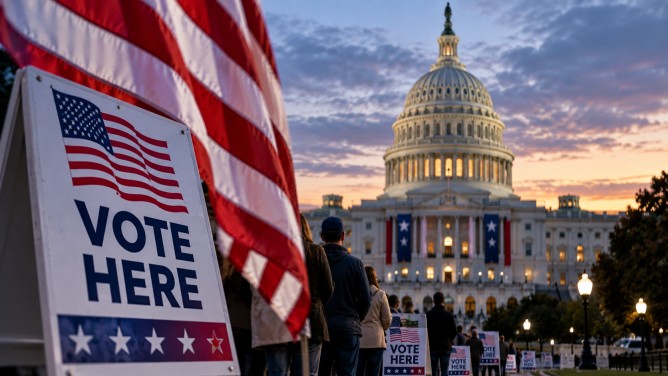
As the 2026 U.S. midterm elections approach, both Republicans and Democrats are gearing up for what promises to be a pivotal political battle. With the elections slated for November 3, Republicans are tasked with defending their control over Congress amid President Donald Trump’s low approval ratings and ongoing inflation concerns. Meanwhile, Democrats aim to leverage these issues to gain ground in both the House and the Senate. Campaign efforts are expected to gain momentum post-Labor Day, with only two months left before voters head to the polls.
Recent polls indicate that Democratic candidates are gaining traction in several significant congressional races, prompting election analysts to adjust their forecasts in favor of the Democrats. Historically, midterm elections have often served as a referendum on the sitting president’s performance, typically resulting in losses for the president’s party. This historical trend poses a considerable challenge for Republicans as they strive to maintain their legislative dominance.
Economic issues, particularly inflation, are at the forefront of the Democrats’ campaign strategy. They hope these concerns, coupled with opposition to Trump’s policies, will motivate voters to support their candidates. However, Republicans remain optimistic, believing they can defy historical patterns and retain their majorities. Financially, Trump-affiliated political groups hold a substantial advantage, possessing the funds necessary to bolster Republican campaigns. Additionally, redistricting in GOP-led states may provide a buffer to protect certain seats.
The 2022 midterms serve as a recent reminder of how quickly political dynamics can shift. Despite initial expectations of a Republican surge driven by high inflation and widespread dissatisfaction with the Democratic administration, Democrats managed to exceed expectations. A critical factor was the Supreme Court’s decision to overturn the constitutional right to abortion, which galvanized Democratic voters, thereby limiting Republican successes.
With Trump now serving a second term in the White House, his direct involvement in the midterm campaigns adds an extra layer of complexity to the elections. Both parties are bracing for a fiercely competitive race that will likely shape the trajectory of Trump’s presidency as it enters its concluding years. The outcome of these elections will not only influence the balance of power in Congress but also impact the legislative agenda for the remainder of Trump’s term.