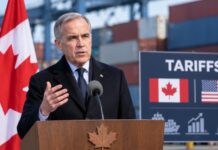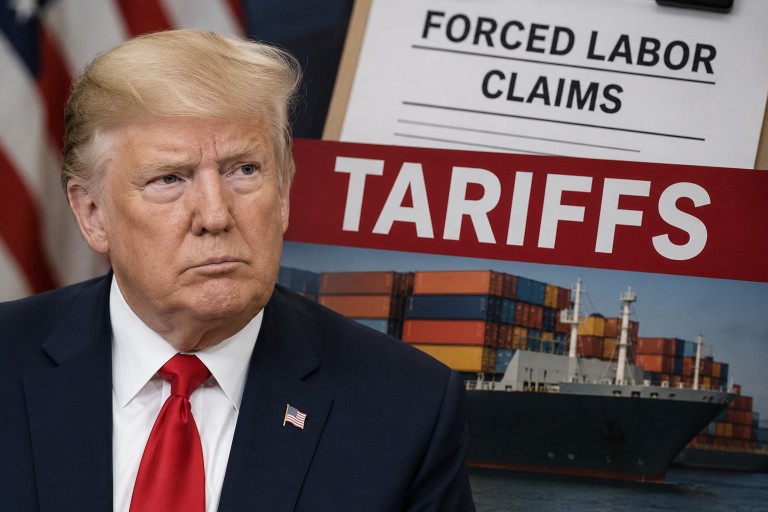
President Donald Trump is drawing fire after unveiling a new set of tariffs targeting imports from over 80 countries, which his administration is defending as a necessary response to forced labor concerns. Critics, however, are accusing the administration of leveraging these humanitarian issues to broaden its trade policies. The tariffs, which range from 10% to 12.5%, affect a wide array of nations including the United Kingdom, members of the European Union, Canada, Mexico, Australia, India, and China. These measures are being implemented under Section 301 of the Trade Act of 1974, a legal provision that allows the U.S. government to take action against nations engaged in unfair trade practices, such as the use of forced labor.
Jamieson Greer, the U.S. Trade Representative, defended the decision by highlighting the failure of many countries to sufficiently prevent goods produced with forced labor from entering international supply chains. He emphasized that the United States expects its trading partners to enhance enforcement against these practices. However, the administration’s rationale has faced significant backlash from Democratic lawmakers. Representative Richard Neal acknowledged the seriousness of forced labor as a global issue but argued that it should not be used as a convenient excuse for expansive tariff policies. Meanwhile, Representative Linda Sánchez questioned the logic behind imposing similar tariff rates on countries with robust labor protections as those criticized for forced labor.
This latest tariff initiative follows previous Trump-era tariffs that encountered legal challenges, with U.S. courts ruling that several of those measures overstepped presidential authority. The current administration has chosen a different legal approach for these new tariffs, yet legal experts anticipate additional court challenges. Detractors warn that the tariffs could exacerbate financial burdens on American consumers. Senate Democratic leader Chuck Schumer criticized the administration for adding pressure to households already grappling with inflation, while Representative Brendan Boyle labeled the tariffs as a de facto tax on consumers.
Public opinion surveys reveal that many Americans perceive tariffs as a factor contributing to rising prices, though the Trump administration maintains that its trade policies are designed to safeguard American industries, manufacturing, and jobs. Within the Republican Party, reactions are mixed. Some lawmakers endorse the tariffs as a tool to combat unfair trade practices, whereas others express apprehension that increased import costs could eventually lead to higher consumer prices in the United States.